ラベル ENGLISH の投稿を表示しています。 すべての投稿を表示

2021/04/10

KOTODAMA 言霊, MY NEW BOOK

KOTODAMA 言霊. The Heart of Japan, Art and Culture.

KOTODAMA 言霊. The Word has Life. The Word has Soul... Thus begins the chapter in which this expression of power is explained. Concentrate ki 気 and make a sentence of the word to be fulfilled. That is the power of KOTODAMA.


There are many books written about Japanese concepts that have become very fashionable in recent years such as IKIGAI, SHINRINYOKU, WABI-SABI & ART...etc. KOTODAMA 言霊, is a book that collects twenty-eight concepts, some of them unpublished outside Japan and that appear for the first time in this book such as KOKORO WO KOMETE 心を込めて, KOTODAMA 言霊, KACHOUFUGETSU 花鳥風月...etc some of them we have already discussed in this blog and in the facebook group JAPAN ART & CULTURE |Nihon no kokoro 日本の心. 


In this book you will find a compilation of all those concepts that throughout my more than twenty years living in Japan, have left a mark in my heart and have changed my way of perceiving the world.That is why after many years collecting all this information with my own experience and in my own life I wanted to share them with the world in a fun and entertaining way, telling my own experiences, as you can read in the presentation and back cover of the book:

"...Brushstrokes of Japan ...
I intend to show a series of concepts of Japanese Art and Culture, without going deep into any of them. So that they bring you closer to Japan.

Some are a series of concepts of Japanese philosophy of life that, if you apply them, will change your course and your way of perceiving the world as they have done with me.

I hope they will help you find peace and happiness as much as they have helped me.

Currently KOTODAMA 言霊, is only available in Spanish, and you can get it in your Amazon Marketplace.
If you want it dedicated you must buy it on the same website of Sonia G Caballero and fill out the form created specifically to be able to offer the books with a dedication. An exclusive service that you can enjoy and have your book or make a unique gift with a dedication of the author for the person to whom you give the book.


Order your book KOTODAMA言霊 dedicated here.

or in your Amazon marketplace.

 

www.soniagcaballero.com


contact@soniagcaballero.com

2021/03/02

ORIGAMI | 折り紙

ORIGAMI | 折り紙

Compartir...
Share on FacebookTweet about this on TwitterShare on LinkedIn

HOW IMPORTANT IS THE CULTURE OF PAPER AND ORIGAMI?

I remember an occasion while my children and I were waiting for our turn in the waiting room of a hospital, a very nice elderly man came up to us and began to make birds out of newspaper and gave them to the children. The skill and speed with which that gentleman made a swallow or a sparrow were incredible. He made us a multitude of little birds, all of them different from each other.

In elementary school my children made many Origami figures. In Japan, all the children know how to make origami figures.

It is important to know its benefits. NASA uses Origami to confront mathematical challenges on some occasions. The Japanese tradition of paper folding has acquired a new dimension inspiring a series of space designs in the Jet Propulsion Laboratory of NASAJ (PL-Caltech, 2017)

Origami enhances creativity. In addition, it helps create patterns in the brain, as well as developing a sense of order. It also helps us exercise our concentration, since one must pay attention to following the steps so as not to get lost.

People who have followed individual or group origami therapies have clearly benefited not only physically or cognitively, but also emotionally, since this art form requires high doses of patience and perseverance, and as progress begins to be achieved, satisfaction is obtained. The folding process becomes a moment of tranquility, isolation, concentration and relaxation, which reduces stress and anxiety. Also, completing a creative project improves the sense of personal satisfaction and self-esteem.

The senses that are most activated during the folding process are those of touch and sight. Regarding the first, origami is a useful tool to stimulate people with mobility difficulties in the hands, in need of rehabilitation, or rheumatism. It is also beneficial for people with movement and muscle control problems, fine motor skills – small movements that require precision, or hand- to-eye coordination.

As for the repercussions on the eyes, trying to visualize the figures and remembering images of the steps to be taken stimulates people with visual disabilities and sequential visual memory or visual attention problems. Likewise, spatial memory, orientation and the ability to recognize the shapes of plane figures and 3D figures are improved.

The development of cognitive abilities has been shown to be linked to a person’s psychomotor development, so it is not surprising that origami helps improve memory, perception and attention (E. Tramuns, 2017).

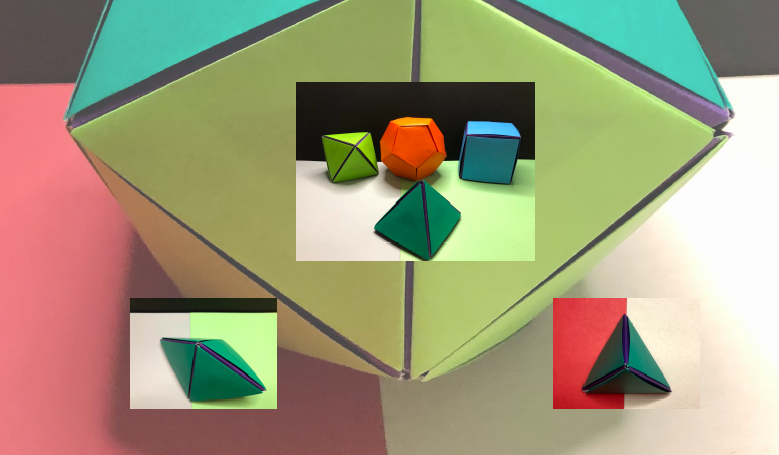
A practical way of using origami to learn mathematics in a fun and playful way is already being carried out in some schools in Japan, where children learn the main geometric polyhedral figures with origami. It is really fun. My kids for example, after making all those figures and creating all those new brain connections, they can spend hours building many more figures from those basic patterns.

In the FUN MATH/ Geometry/ Polyhedra with Origami course all these basic figures are collected. It is a way to share with the world new ways of learning that give very good results and help to develop and create new talents. It is a privilege to have access to something so exclusive and unique that is only developed in schools in Japan. You can download the free PDF of the course here.


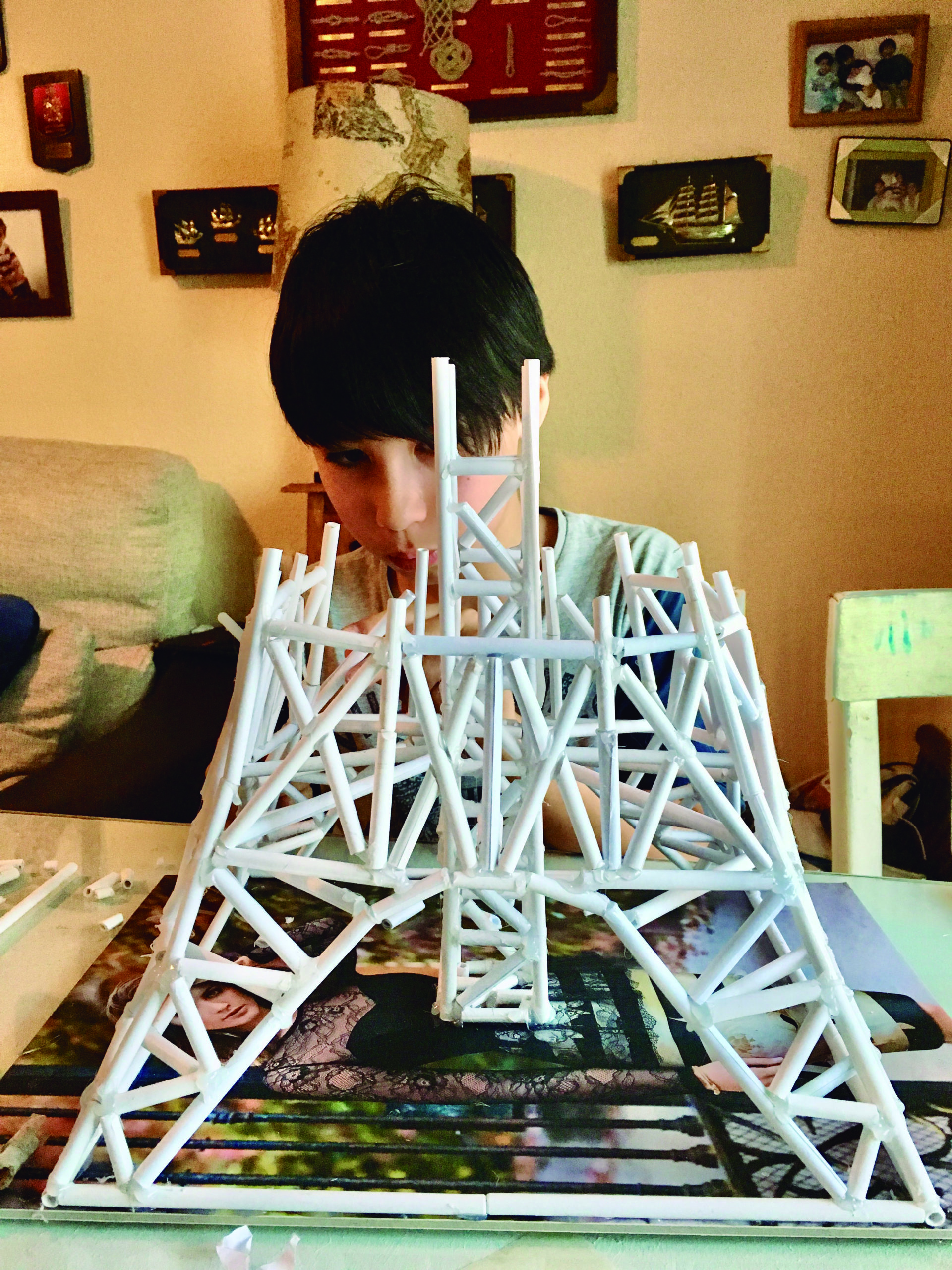
More about origami and  origami projects at JAPANESE ART and CULTURE for CHILDREN BOOK. Vol I among many other projects like this one of Japanese Architecture (Tokyo Tower made of paper).

2021/02/28

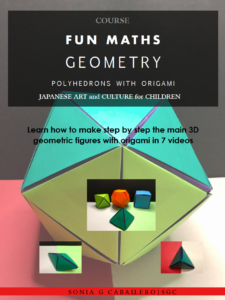
New Course: FUN MATHS / Geometry Polyhedrons with Origami

New Course: FUN MATHS / Geometry Polyhedrons with Origami

Compartir...
Share on FacebookTweet about this on TwitterShare on LinkedIn

SERIE: JAPANESE ART and CULTURE for CHILDREN / Fun education/ Courses.


A practical way of using origami to learn mathematics in a fun and playful way is carried out in some schools in Japan, where children learn the main geometric polyhedral figures with origami. The children, after making all the figures and creating all those new brain connections, can spend hours building many more figures from those basic patterns as they contain the five Platonic solids, considered the geometric bodies applied to Architecture. The teaching and learning process begins with an introduction to form and three-dimensional space, the basis of which is geometry and the primary forms as the structure of nature common to all things in the universe.

In the Course of FUN MATHS/ Geometry/ Polyhedrons with Origami all these basic figures are collected.  It is a new way of learning that gives very good results and helps to develop and create new talents. It is a privilege to have access to something so exclusive and unique that is only developed in some schools in Japan.

NASA uses Origami/Papiroflexia to tackle mathematical challenges on some occasions. The Japanese tradition of paper folding, has taken on a new dimension inspiring a series of space designs at NASAJ’s Jet Propulsion Laboratory (PLCaltech, 2017).

NASA Asks Experts In Ancient Art Of Origami For Submissions

 Not only from a mathematical point of view, origami boosts creativity, in addition, it helps to create new patterns in the brain, develops a sense of order. It also serves us to exercise concentration, since one must pay attention to follow the steps and not get lost.

People who have followed individual or group origami therapies have not only benefited clearly in the physical or cognitive aspect, but also in the emotional, since this art requires high doses of patience and perseverance, and as progress eventually appears, it is pleasantly satisfying. The folding process becomes a moment of tranquility, isolation, concentration and relaxation, which reduces stress and anxiety. Also, completing a creative project improves personal satisfaction and self-esteem.

In terms of visual impact, trying to visualize the figures and remembering the images of the steps to be performed stimulates people with visual impairments and visual sequential memory or visual attention problems. It also improves spatial memory, orientation and the ability to recognize the shapes of flat figures and 3D figures.

It has been shown that the development of cognitive abilities is linked to the psychomotor development of the person, so it is not surprising that origami helps to improve memory, perception and attention. (E. Tramuns, 2017).

More information about the Course FUN MATHS / Geometry Polyhedrons with Origami 


2021/02/23

KINTSUGI | 金継ぎ

KINTSUGI | 金継ぎ

Compartir...
Share on FacebookTweet about this on TwitterShare on LinkedIn

THE ART OF BEAUTIFYING DAMAGE, AN ANCESTRAL JAPANESE TECHNIQUE FOR “REPAIRING WITH GOLD”


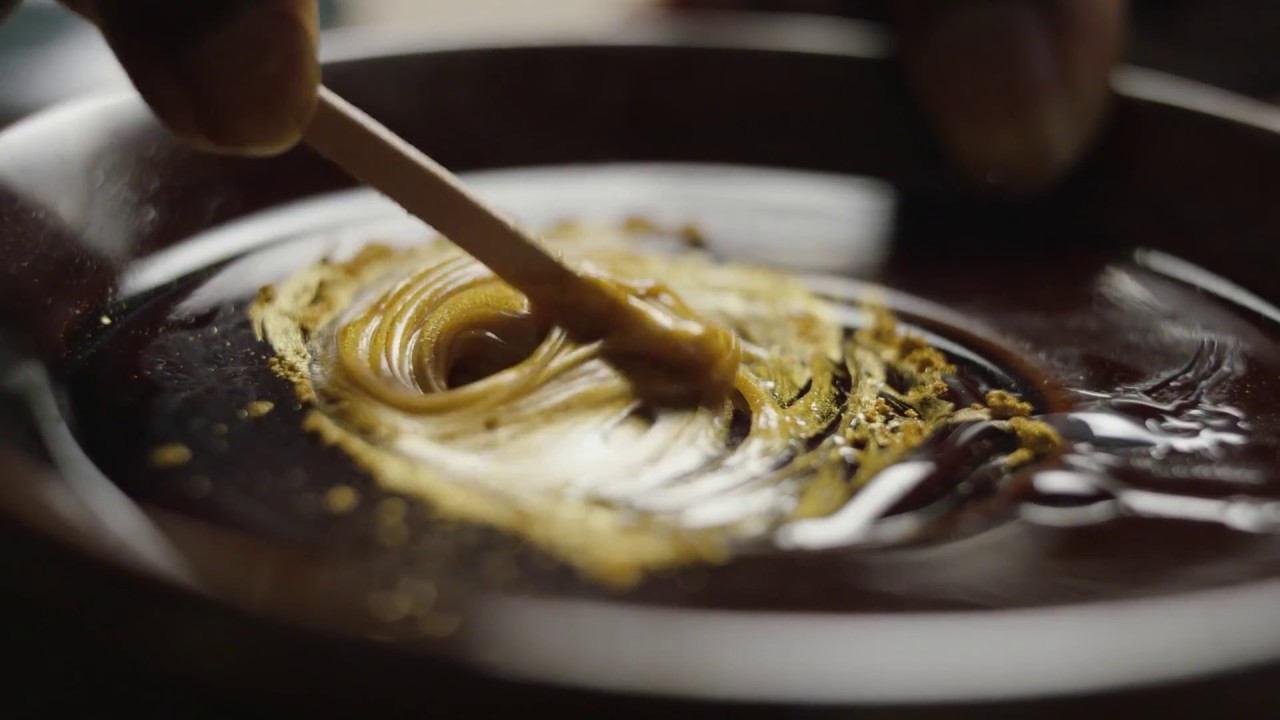
 The story goes that at the end of the 15th century, during the Ashikaga shogunate, the shogun Ashikaga Yoshimasa sent some tea cups to China to repair them. But he did not like the result, so he asked Japanese craftsmen to repair them so that they would retain their charm. These Japanese craftsmen rebuilt the cups using a varnish with gold dust. The cups were revalued in terms of importance and beauty. This gave rise to the Japanese art of KINTSUGI.

Even today this technique is used to increase the value of the original piece.

In Japan everything handmade is highly valued. Even more so if it is something that we appreciate and value for its sentimental importance and the passage of time make it even more precious and irreplaceable, WABI-SABI. Hence the need to repair if an object should break.

This is the case of ceramic pieces, sometimes wood, when the broken pieces are joined with the technique of KINTSUGI, repair with resin and gold dust, sometimes the recomposition is done with silver or platinum.


KINTSUGI金付き

金(gold)

繕い(repair)

Behind this repair technique lies a very valuable philosophy of life. All hard and difficult experiences make us stronger and sometimes give new meaning to our existence. If we look at an unfortunate event in our life in isolation, we see it as something unpleasant. It is like a single, meaningless note. But when we look at the ensemble of all the musical notes, the decisions that we make thanks to that event, and that make us overcome difficult situations, we notice a beautiful melody. Because every obstacle you overcome is a step you climb in your own value.


Image rights Kintsugi Hope


2021/02/08

KUU |空

THE JAPANESE WORD WHERE CREATIVITY HAS NO LIMITS AND EVERYTHING IS POSSIBLE.


KUU, the empty but energetic space where imagination can be shown in all its immense possibilities.

KUU空

空 (Sky/Empty)

KUU, is one of those Japanese words of inexact translation, and that we can apply to an infinity of spaces and elements.

I remember the first time I heard this word more than 20 years ago and it was difficult to understand and translate in my own language. A very short word but it expresses a universe of possibilities. The concept of the space occupied by energy and in which ingenuity allows it to express itself in all its power.

I find an intimate relationship between the meaning of the word KUU and ZEN. Sūntaya is the spirit of creativity, formless but at the same time reflecting the origin of all capacity. When we give form to what is possible within a reality, we can consider it an act of creativity.

It is then when we can understand the KUU within art as architecture, creating elements or spaces that touch the soul, which also open all those options in our heart to give us inspiration or create emotions such as peace, and make us travel in our mind or incite us to concentration and relaxation.


When I sit in front of a blank canvas, sometimes I have a clear image of what I am going to capture on it, but other times I close my eyes and observe in my mind all the ideas that arise of what could be the new work. This is what KUU is for the artist. Whether it is a blank canvas, a mass of clay or a piece of gold that will become a piece of jewelry… the possibilities are endless. It is the same for the artist as it is for an architect or a writer.

contact@soniagcaballero.com

Telephone. +81 80-4850-3014

2021/02/07

WHEN I GROW UP I WANT TO BE HAPPY!


Compartir...
Share on FacebookTweet about this on TwitterShare on LinkedIn

A very special book 📕where you educate :

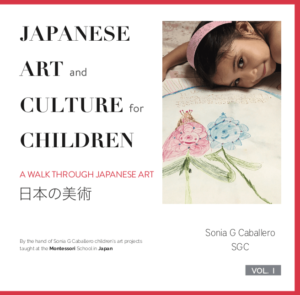
El primer libro que orienta la filosofía educativa japonesa adaptada a niños con proyectos de arte prácticos que además fomentan su creatividad y sensibilidad. Educar desde el corazón y que el niño viva de su talento.
Con “Acercando el ARTE JAPONÉS y la CULTURA a los NIÑOS” encontrarás proyectos que complementarán una educación alternativa a la que nos presenta el sistema.

“As an educator, mother of three children and Art teacher for children ages 3-12 at Japan’s Montessori College, I became aware of where the authentic artist can be found and discovered that art is loved by all children. However, this interest begins to fade as the child matures. They just need to have the materials and tools. This ‘great-little artist’ emerges from carrying out a project with enthusiasm and freedom. As adults we strive, unnecessarily on many occasions, to try to mould the child by encouraging him/her do things that we consider to be correct. However, by trusting their autonomy and letting them investigate and perform a task on their own, can surprise us with fabulous results. On the other hand, it reinforces their self-worth and acceptance when feeling loved and useful: “Joy, feeling your own worth, being appreciated and loved by others, feeling useful and able to produce, are factors of great value to the human soul. ” Maria Montessori.

In this book you will find a very useful tool to develop a strong personality in the child and contribute to building a solid self-esteem, with values that will allow him/her to be a successful adult in life, which can only be translated by the Word ‘happiness’. This is also true because when the basis of a person in their social integration is respect for oneself and everything that surrounds him/her, together with a Japanese IKIGAI philosophy of life, the result is none other than to give meaning to our life. The unique concepts of Japanese culture are detailed in a practical way to apply to the child. All this is achieved through the elaboration of projects that bring him/her closer to Japanese Art. Using their unique techniques and styles will help fuel their creativity.

Children will witness that with small decisions and constant effort, great achievements are achieved. On this occasion, with a ‘small-grea’t work of art.”

Sonia G Caballero


✅When I grow up I WANT TO BE HAPPY!. Help your child find his or her profession with an IKIGAI project included in the book 📕

✅ARTE with projects for children of all ages.

✅ ART HISTORY.

✅VALUES, with Japanese concepts with important themes such as the value of things, attitude towards life and others, fostering self-confidence, self-esteem, the importance of doing things from the heart….

✅Foster CREATIVITY by acquiring skills such as collaboration, dedication, problem solving, concentration, perseverance, focus, non-verbal communication, constructive feedback, collaboration….

And all this with unique art projects developed and taught by Sonia G Caballero at the Montessori school in Japan.

Here is a review by writer Virginia Gil Rodriguez: “JAPANESE ART and CULTURE for CHILDREN  by Sonia G Caballero, artist as well as pedagogue since she has taught her techniques for the last 20 years to students from 3 to 12 years old in the Montessori school of Yokohama in Japan. This book is a gift that contains her art and her knowledge: the quality of the paper, the images, the layout. You can see that, in every detail, the artist has put her heart, her time, her knowledge. It has 19 practical exercises (there is a section reserved for “my project”) very well explained and illustrated. One of the things I liked the most is to learn about concepts of Japanese wisdom and culture associated with artistic projects: IKIGAI, KOKORO WO KOMETE, MINIMALISM, WABI SABI, etc. As the author says it is a book to do together: at home, in any Montessori school, in any class that works by projects, in any art class. I loved it. I can only recommend it.”


📕“Acercando el ARTE JAPONÉS y la CULTURA a los NIÑOS. VOL. I”

Join the Book📕 facebook group where you can share your children’s art projects and follow tips and updates, information…